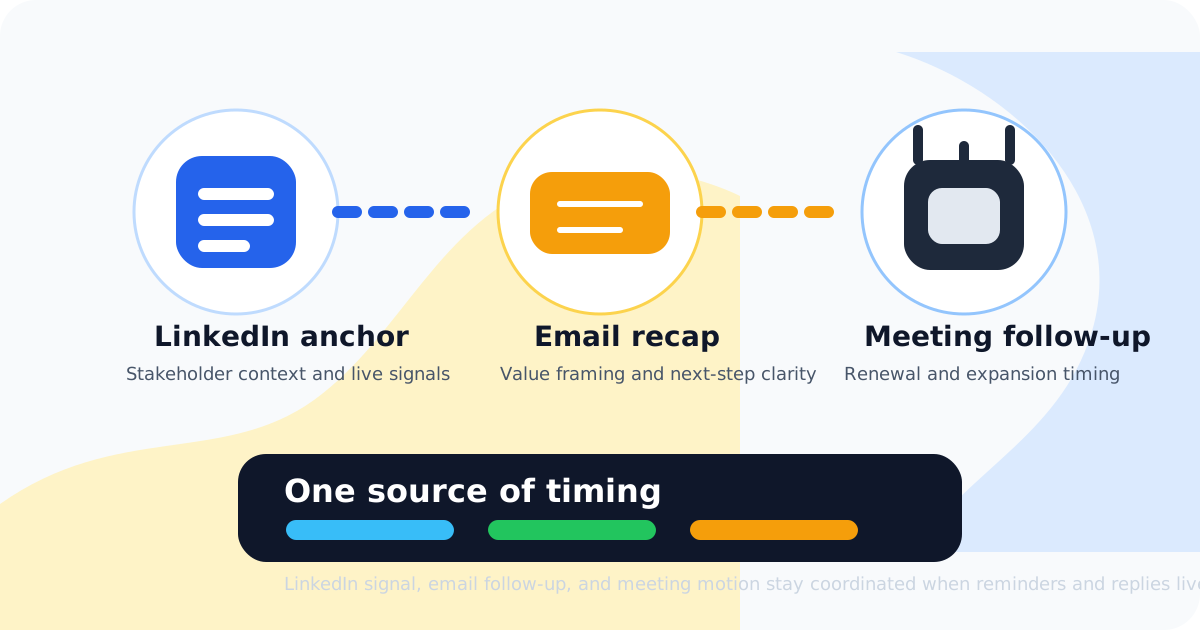
Multi-channel outreach orchestration with LinkedIn for customer success expansion works when LinkedIn anchors the relationship context and every email, reminder, and meeting touch follows that thread. The goal is not more activity. The goal is cleaner continuity across renewal, champion, and expansion conversations.
Customer success teams rarely struggle because they lack channels. They struggle because the channels drift apart. One stakeholder replies on LinkedIn, another gets an email recap, a renewal note sits in a draft, and suddenly the account feels fragmented even though the team is working hard.
LinkedIn is useful because it often shows the earliest signals: role changes, new champions, internal movement, and soft engagement before a formal buying motion becomes visible elsewhere. DMnesia helps turn that context into an operating system by keeping the next follow-up, the due queue, and reply visibility close to the LinkedIn contact instead of leaving the team to reconstruct the story later.
For the broader strategic version, read multi-channel outreach orchestration with LinkedIn. If your process is more explicitly relationship-led, pair this with relationship-first LinkedIn selling for client expansion. Teams focused on detecting live account movement should also use the client-success reply detection guide.
Why LinkedIn is the right anchor for expansion orchestration
Expansion motions are relationship-heavy. They depend on timing, trust, and awareness of who is active now. LinkedIn is often the most visible place to keep that context tied to the person instead of the abstract account record.
| Channel | Best expansion use | How LinkedIn supports it |
|---|---|---|
| Warm check-ins, stakeholder observation, soft follow-up | Keeps the relationship and role context visible | |
| Recaps, value framing, invite details | Feels more natural when it references a real relationship thread | |
| Calendar or meeting follow-up | Next-step confirmation and internal alignment | Stays tied to the stakeholder who actually moved the motion |
What strong orchestration looks like in customer success expansion
1. Keep a small set of live stakeholders visible
Expansion work is usually about a handful of people, not a mass list. Save the relevant contacts, stage them clearly, and keep the next action attached to the person who matters. DMnesia’s tracked-contact workflow is useful here because it helps teams see who is live right now and who can wait.
2. Let one reminder system drive the next move
If LinkedIn follow-up, email check-ins, and meeting nudges all run from separate memory loops, the motion gets clumsy fast. DMnesia’s reminder flow gives teams one visible place to decide what is due next, whether that is a LinkedIn note, an email recap, or a follow-up after a call.
3. Pause the old plan when the account answers
Expansion trust breaks when a stakeholder replies and the old reminder stack keeps firing anyway. Reply visibility matters because it tells the team the sequence should shift from scheduled follow-up to live conversation. That is exactly the kind of operational gap DMnesia is built to close.
4. Coordinate the message theme across channels
The LinkedIn touch, the email recap, and the meeting request should not repeat each other word for word, but they should feel like one joined-up conversation. Templates help when they are used as structure, not automation. DMnesia keeps those frameworks close to execution so reps can stay consistent without sounding robotic.
Useful rule: if a stakeholder could see every touch side by side and it would still feel coherent, your orchestration is working. If it looks like three disconnected systems, it is not.
How expansion teams avoid over-orchestrating warm accounts
Customer success teams need structure, but they also need restraint. Expansion can feel pushy when the system is optimized for activity instead of relevance.
- Use fewer, clearer touches instead of high-volume sequences.
- Base reminders on account context such as a QBR, renewal window, or stakeholder change.
- Treat replies as a reset point so the live conversation outranks the old plan.
- Keep the queue visible so nothing warm relies on memory alone.
This is where DMnesia’s lighter, browser-native approach is helpful. It gives teams a visible operating layer without forcing a giant CRM ritual every time a stakeholder likes a post, changes roles, or replies after silence.
Where DMnesia fits in the expansion workflow
DMnesia works well for customer success expansion because it handles the operational middle: saving the contact, surfacing the due work, detecting replies, and helping the next step stay visible while the relationship still feels personal.
If your challenge is team-wide visibility rather than individual execution, the related read is shared LinkedIn outreach dashboard for expansion teams. If your team wants the lighter no-full-CRM operating model, compare it with tracking LinkedIn conversations without a CRM for account managers. For the broader category view behind this motion, read LinkedIn outreach tracker for customer success teams.
People also ask about multi-channel outreach orchestration with LinkedIn for customer success expansion
Why use LinkedIn in a customer success expansion sequence?
LinkedIn helps customer success teams spot stakeholder movement, keep expansion follow-ups warm, and anchor email or meeting outreach to a visible relationship context.
What channels should expansion teams coordinate with LinkedIn?
Usually LinkedIn, email, and calendar-based follow-up. The goal is not more channels, but clearer continuity across the touches that already matter.
How do you prevent expansion sequences from feeling pushy?
Keep one visible source of timing, pause reminders when a stakeholder replies, and make each touch reference the live account context instead of repeating generic copy.
Conclusion: orchestrate the relationship, not just the sequence
The best customer success expansion motion does not feel like multi-channel outreach from the stakeholder side. It feels like one attentive relationship handled well across the moments that matter. LinkedIn is a strong anchor because it keeps people, timing, and visible context close together.
Use DMnesia to keep expansion follow-ups coordinated, replies visible, and warm stakeholder conversations from falling into disconnected systems.
Coordinate expansion touches without losing context
DMnesia helps teams manage LinkedIn follow-ups, due reminders, and reply visibility so expansion work stays coherent across channels.
See how DMnesia worksFrequently asked questions
Why use LinkedIn in a customer success expansion sequence?
LinkedIn helps customer success teams spot stakeholder movement, keep expansion follow-ups warm, and anchor email or meeting outreach to a visible relationship context.
What channels should expansion teams coordinate with LinkedIn?
Usually LinkedIn, email, and calendar-based follow-up. The goal is not more channels, but clearer continuity across the touches that already matter.
How do you prevent expansion sequences from feeling pushy?
Keep one visible source of timing, pause reminders when a stakeholder replies, and make each touch reference the live account context instead of repeating generic copy.