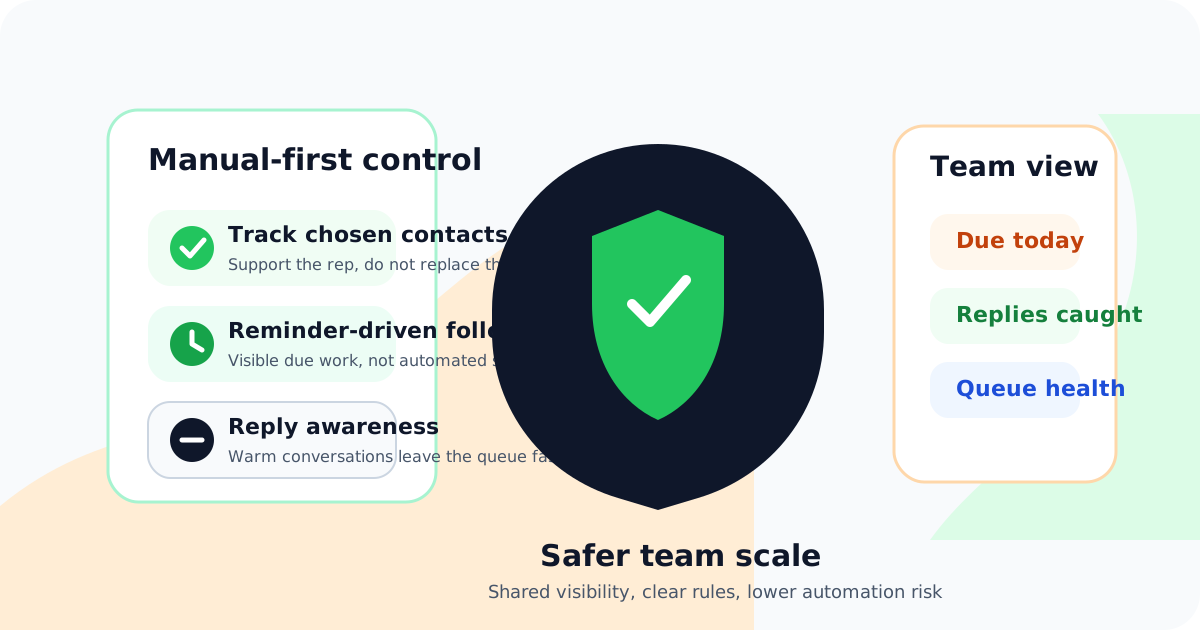
A LinkedIn tracker that doesn't get banned for compliance-conscious sales teams is usually manual-first, visibility-oriented, and deliberately restrained. It helps reps remember, review, and respond without automating the actual outreach behavior that creates the most platform and governance risk.
Solo reps often ask, what feels safe? Teams ask a different version: what can we govern? That is the real compliance lens. Leaders want a workflow that helps reps follow up consistently without encouraging risky behavior, weak message quality, or unclear data handling.
This is where team-safe tracking looks different from automation-heavy tooling. A safer system keeps the rep in control while giving the organization enough structure to coach, review, and understand what is happening. DMnesia fits that category because it focuses on manual contact tracking, reminders, reply visibility, a Today queue, and optional shared visibility instead of trying to auto-send or mimic rep actions at scale.
The best companion reads are the general guide to safer LinkedIn tracking, the privacy-friendly tracking guide, and the private LinkedIn tracker without automation guide. This article narrows the question to what a team can adopt without raising unnecessary compliance anxiety.
What compliance-conscious teams actually want from a LinkedIn tracker
They usually want three things at once: better follow-up discipline, clearer team visibility, and lower automation risk. That combination pushes them away from do-it-for-me products and toward keep-us-organized products.
| Team need | Safer tracking answer | Why it is lower risk |
|---|---|---|
| Rep consistency | Manual reminders and a due-work queue | The system prompts the rep instead of acting like the rep |
| Reply awareness | Conversation visibility and fast status changes | Warm threads get handled more carefully |
| Manager oversight | Shared dashboards or lightweight org access | Leadership sees workflow health without forcing risky automation |
| Governance | Manual-first rules and clear operating boundaries | The team can explain what the tool does and does not do |
Why manual-first tracking matters more at team scale
1. Governance is easier when the rep stays in control
When the workflow is reminder-driven, leaders can document expectations clearly. Reps are still choosing who to track, when to follow up, and how to write the message. That makes the process easier to review and coach.
2. Quality control improves
Automation-heavy behavior often creates volume before it creates judgment. Compliance-conscious teams usually want the opposite. They want a smaller number of higher-quality touches that reps can stand behind.
3. Shared visibility does not need auto-sending
One reason teams drift toward risky tools is the assumption that scale requires automation. It often does not. DMnesia shows another path: shared operating visibility, reminders, stats, and reply awareness without turning the product into a bot.
Good policy test: if you can describe the tool to a risk-conscious leader as it helps reps stay organized and respond on time, that is a much healthier category than it performs outreach for them.
How teams can evaluate a safer LinkedIn tracker
Ask practical workflow questions, not just marketing questions.
- Does it help reps track only the contacts they intentionally work?
- Does it support reminders and reply visibility without auto-sending?
- Can managers see enough to coach without forcing reps into extra admin?
- Is the tool’s role clear: support, not simulation?
That framing usually surfaces the right answer quickly. If a product’s main pitch is remove the rep from the loop, it is not the safer category. If the pitch is make the rep harder to forget and easier to govern, it is much closer.
Where DMnesia fits for compliance-conscious sales teams
DMnesia is useful for teams that want structured execution without automation creep. It gives reps a browser-native workflow for saving contacts, setting follow-ups, seeing due work, detecting replies, and using templates as drafting support. It also gives organizations a path to shared visibility and reporting without changing the core manual-first operating model.
If your team’s question is more specifically about policy-sensitive LinkedIn workflows, compare this with LinkedIn outreach compliance with TOS for sales teams. If the main concern is rollout and adoption, the adjacent guide is the sales-team rollout checklist.
People also ask about LinkedIn trackers for compliance-conscious sales teams
What makes a LinkedIn tracker safer for sales teams?
Safer team-oriented trackers stay manual-first, focus on reminders and visibility, and avoid automated sending or other behavior that tries to act like the rep.
Why do compliance-conscious teams avoid LinkedIn automation?
Because they want tighter control over account risk, message quality, and data handling. Manual-first workflows are easier to govern than bot-like activity.
Can a safer LinkedIn tracker still help a team scale?
Yes. Teams can scale discipline through shared visibility, reminders, and reply awareness without automating the outbound actions themselves.
Conclusion: safer scale comes from visibility, not automation
Compliance-conscious sales teams do not need a passive spreadsheet and they do not need a risky bot. They need a system that makes the rep more consistent, the manager more informed, and the organization more comfortable with how LinkedIn work is actually happening.
Use DMnesia to keep LinkedIn follow-ups visible, governed, and manual-first while your team grows.
Give your team a safer LinkedIn workflow
DMnesia helps sales teams track contacts, schedule follow-ups, and catch replies without relying on automation-heavy behavior.
Compare DMnesia for teamsFrequently asked questions
What makes a LinkedIn tracker safer for sales teams?
Safer team-oriented trackers stay manual-first, focus on reminders and visibility, and avoid automated sending or other behavior that tries to act like the rep.
Why do compliance-conscious teams avoid LinkedIn automation?
Because they want tighter control over account risk, message quality, and data handling. Manual-first workflows are easier to govern than bot-like activity.
Can a safer LinkedIn tracker still help a team scale?
Yes. Teams can scale discipline through shared visibility, reminders, and reply awareness without automating the outbound actions themselves.