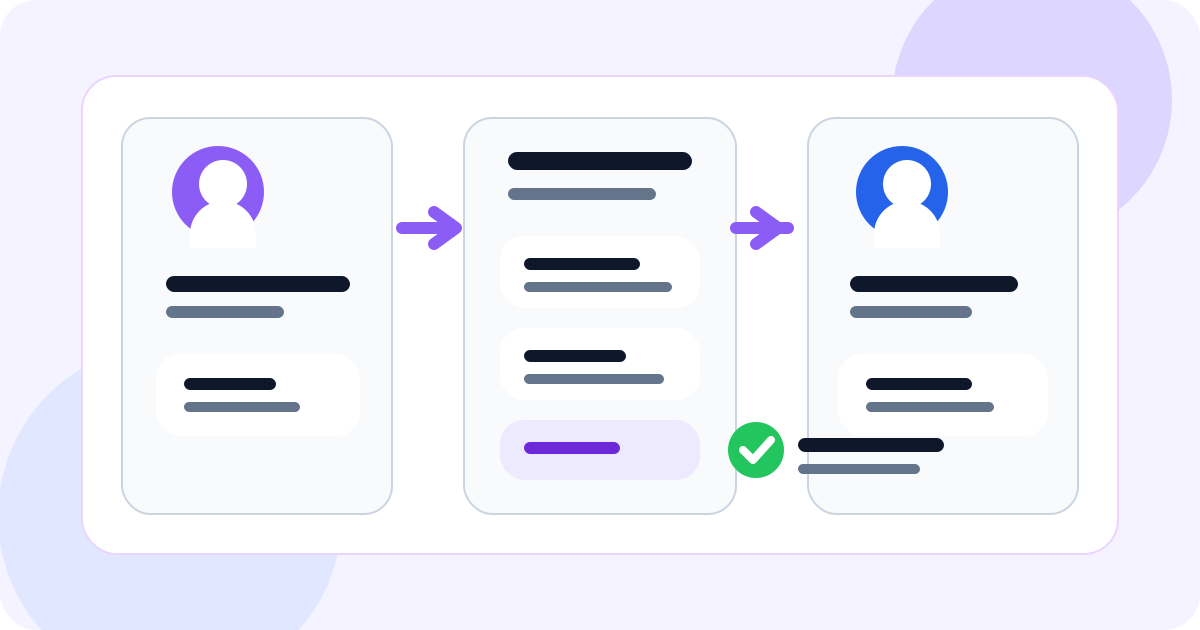
A LinkedIn outreach handoff workflow should transfer the owner, relationship context, current stage, and next follow-up date without forcing the new rep to reconstruct the conversation from scratch. That is how teams protect warm accounts during SDR-to-AE transitions, coverage changes, and account reassignments.
Handoffs feel operational, but they are really a revenue quality issue. A good prospect can disappear between people even when the team did the hard part correctly: found the account, opened the conversation, and earned a reply. What kills momentum is not lack of effort. It is lack of transfer clarity.
DMnesia helps here because the active memory of the conversation stays tied to the tracked contact, the reminder timeline, and the reply state. The rep works in the browser, but the team still has a shared view of the system around that workflow.
When LinkedIn handoffs usually happen
Most teams do not have just one handoff case. They have several, and each one can create dropped follow-up if the system is too loose.
- SDR to AE handoff after a prospect replies or qualifies.
- Territory reassignment when books change mid-quarter.
- Out-of-office coverage when timing matters but the original owner is unavailable.
- Manager rebalancing when workload needs to shift across the team.
| Handoff style | What transfers | Risk if the transfer is weak |
|---|---|---|
| Verbal or Slack handoff | A rough summary from one rep to another | Context gets simplified or forgotten |
| CRM-only handoff | Record ownership changes, but browser timing can lag | New rep still has to reconstruct the live conversation |
| Workflow-native handoff | Owner, status, reply state, and next action stay visible | Much lower chance of warm momentum getting lost |
What information must survive the handoff
Why the prospect mattered in the first place
Without the reason for outreach, the new owner inherits a name but not the strategy behind it. That is how handoffs produce generic follow-ups that sound disconnected from the first rep’s work.
What already happened
The new owner needs the stage, the recent touch pattern, and whether the contact is still cold, warm, or actively replying. If the system includes reply detection, this becomes much easier to trust.
What should happen next
The next step has to be explicit. DMnesia’s reminder flow matters here because a handoff should place the contact into the new owner’s real operating queue, not just into their mental to-do list.
Who now owns the account
This sounds obvious, but many handoffs fail because the transfer is implied rather than visible. The companion guide to LinkedIn account ownership for sales teams explains why the new owner should never be ambiguous.
Simple handoff test: if the new owner cannot send a relevant next message in under two minutes, the transfer did not keep enough context.
How DMnesia supports cleaner LinkedIn handoffs
DMnesia does not turn handoff into a separate admin project. It keeps the working context where the team already manages the conversation.
- Tracked contacts preserve the active record around the relationship.
- Reply-aware workflow stops the team from treating a live conversation like a cold queue item.
- Today queue visibility helps the new owner act on the next step instead of discovering it late.
- Team portal visibility gives managers a shared way to review coverage and spot handoff risk.
That is also why a Chrome extension for LinkedIn pipeline team edition matters. Rep speed and team transferability need to exist together. A handoff-friendly workflow cannot live only in one person’s memory.
How to improve handoff quality without adding heavy process
Most teams do not need a long checklist. They need a consistent mini-standard.
- Transfer ownership before the follow-up is due instead of after it is already late.
- Move the next action with the contact so the new owner sees real timing, not just a note.
- Keep message context visible with shared templates and relationship notes when useful.
- Review handoff-heavy accounts in the team dashboard so managers can catch gaps early.
If your handoff process also depends on routing new accounts before a rep ever starts outreach, read LinkedIn lead routing for sales teams for the upstream assignment layer.
If you want the broader management view that starts once ownership has already changed, continue with how sales teams manage LinkedIn outreach across reps after handoffs.
People also ask about LinkedIn outreach handoff workflow
What is a LinkedIn outreach handoff workflow?
It is the process teams use to transfer an active LinkedIn conversation from one owner to another while keeping the context, next action, and reply status clear.
When do LinkedIn handoffs usually happen?
They usually happen during SDR-to-AE transitions, territory changes, out-of-office coverage, team restructuring, or when a manager rebalances account load.
What information should transfer in a LinkedIn handoff?
At minimum, the new owner should inherit the relationship context, current status, next follow-up date, and whether the contact has replied already.
Conclusion: the handoff is part of the customer experience, not just an internal step
A LinkedIn outreach handoff workflow is really about preserving momentum. The prospect should feel like the team stayed coherent even when the owner changed behind the scenes.
If your handoff process creates silence, duplicated intros, or confused follow-ups, the team is leaking trust at exactly the moment the conversation is becoming real.
Turn handoffs into continuity instead of reset
Use DMnesia to keep relationship context, reply status, and next-step timing visible when LinkedIn outreach ownership changes.
Compare Team PlansFrequently asked questions
What is a LinkedIn outreach handoff workflow?
It is the process teams use to transfer an active LinkedIn conversation from one owner to another while keeping the context, next action, and reply status clear.
When do LinkedIn handoffs usually happen?
They usually happen during SDR-to-AE transitions, territory changes, out-of-office coverage, team restructuring, or when a manager rebalances account load.
What information should transfer in a LinkedIn handoff?
At minimum, the new owner should inherit the relationship context, current status, next follow-up date, and whether the contact has replied already.