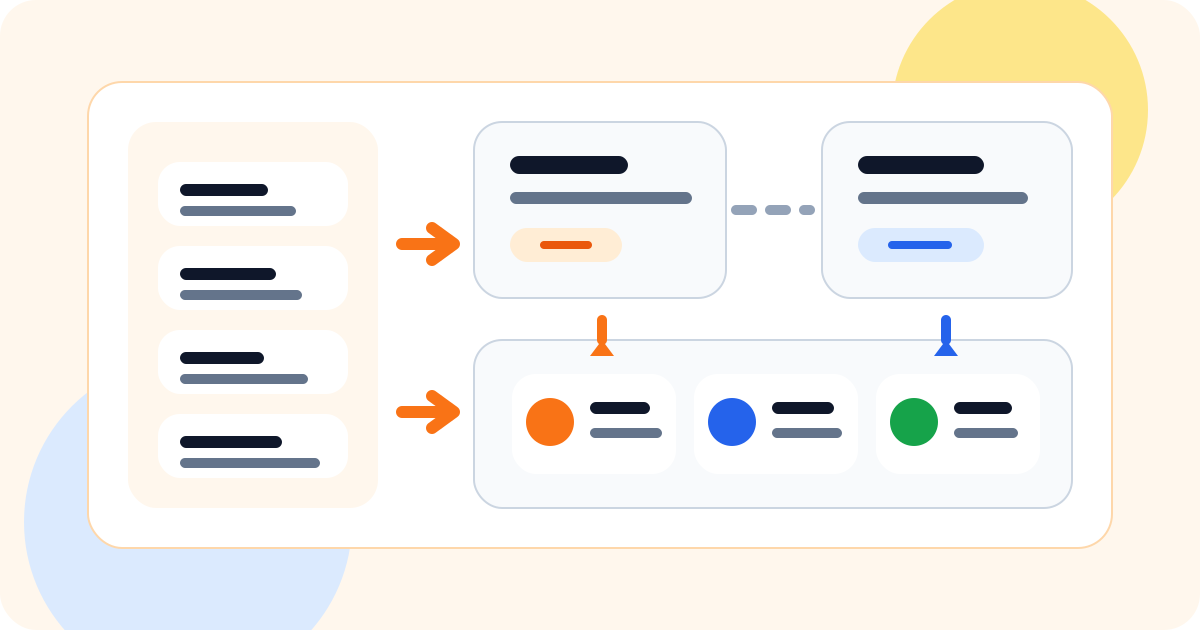
LinkedIn lead routing for sales teams means deciding who should work each prospect before outreach begins, then placing that lead directly into the right rep workflow. Teams that do this well waste less time on overlap, route higher-fit accounts faster, and keep pipeline building separate from active follow-up.
Routing matters because LinkedIn prospecting is usually messy at the top. Good accounts appear through hiring signals, job changes, content activity, referrals, or account research. If those names never move into a clear assignment flow, they sit in personal notes until urgency disappears.
DMnesia is built around a cleaner split. Reps can work from Target Leads when a prospect is still being reviewed, then move people into active tracked follow-up once ownership is decided. At the team level, the platform also supports API access for organizations that want to push curated contacts into rep queues programmatically.
Why LinkedIn lead routing becomes a real problem at team scale
At one rep, lead routing is barely a system. At five or ten reps, it becomes one of the main quality controls in the motion.
- Prospects can match multiple books if territory rules are not applied early.
- Managers need coverage confidence before they ask for more activity.
- RevOps needs a repeatable path from account signal to rep workflow.
- Reps need cleaner starting queues so they work better targets, not more random targets.
| Routing approach | What happens upstream | What reps experience |
|---|---|---|
| Ad-hoc routing | Leads live in spreadsheets or Slack threads | Random priority and uneven quality |
| CRM-only routing | Assignment exists, but browser context is weak | More admin before the first message |
| LinkedIn-native routing | Curated leads move into rep-ready workflow | Faster execution with better fit and timing |
What teams should route on
Territory or segment
This is the basic layer. If a prospect clearly belongs to a rep by geography, company size, or book ownership, the routing logic should respect that first.
Buying signal quality
Some leads are interesting. Others are ready. Routing should separate the two. A strong signal might justify immediate rep ownership, while a weaker signal should stay in a review pool.
Current workload
Even the right account can be wasted if it lands with a rep who is already drowning in follow-ups. Team analytics and shared visibility matter here because routing should be realistic, not purely theoretical.
Conversation stage
If a prospect is still being researched, they may belong in a target-lead queue. Once outreach starts, they belong with a named owner. That stage split is one of the reasons a LinkedIn target leads pipeline is useful before the active follow-up system takes over.
Routing rule: do not send every interesting profile straight into an active rep queue. First decide whether the prospect is ready for ownership or still belongs in a curated pre-outreach pool.
How DMnesia supports LinkedIn lead routing
DMnesia gives teams two clean layers for routing: a browser-native queue where reps actually work and an organization layer where routing logic can eventually connect to other systems.
- Target Leads hold prospects before they become active conversations.
- Tracked contacts take over once a rep starts the real follow-up flow.
- Team portal visibility gives managers a shared place to see what has been loaded and who is active.
- API access supports curated assignment from RevOps, CRM workflows, or other team systems.
The feature page describes this directly: organizations can send a curated list of contacts to each rep automatically and pull conversion data back into their stack. That is the routing model team buyers usually want, because it combines structure with rep speed.
If you are looking at the CRM-side architecture, pair this with LinkedIn API for HubSpot integration or how to integrate LinkedIn outreach data into HubSpot or Salesforce for the reporting layer around the same workflow.
When to route through API or automation
Teams do not need a heavy integration on day one. They need it once lead assignment becomes frequent enough that manual loading creates delays or inconsistency.
- Use manual review first when you are still learning what a good routed lead looks like.
- Use programmatic assignment second when fit rules become stable and you want rep queues pre-loaded.
- Use CRM or workflow sync third when leadership needs shared reporting, routing audits, or downstream automation.
People also ask about LinkedIn lead routing for sales teams
What is LinkedIn lead routing for sales teams?
It is the process of assigning LinkedIn prospects to the right rep based on territory, fit, stage, or team rules so outreach begins with clear ownership and context.
When should teams route a LinkedIn lead?
Most teams route leads once they meet enough fit or timing criteria to deserve active ownership. Before that, they often stay in a target-lead pool for review.
Should LinkedIn lead routing happen in the CRM or in the outreach tool?
The rule can live in the broader revenue system, but the assigned lead still needs to appear where the rep actually works. Otherwise the routing model creates admin instead of momentum.
Conclusion: good routing protects rep attention, not just database order
LinkedIn lead routing for sales teams is really a focus problem. The better your routing, the less time reps waste deciding what to work and the fewer good accounts die before ownership becomes clear.
If your team still moves LinkedIn prospects around by spreadsheet and memory, the routing layer is probably slower than the market you are trying to sell into.
Route better LinkedIn leads into rep-ready queues
Use DMnesia to stage target leads, assign cleaner rep workflows, and connect team routing to your broader revenue stack when you are ready.
Explore Team and API FeaturesFrequently asked questions
What is LinkedIn lead routing for sales teams?
It is the process of assigning LinkedIn prospects to the right rep based on territory, account fit, stage, or team rules so outreach starts with clear ownership and context.
When should teams route a LinkedIn lead?
Teams usually route leads once they meet enough fit or timing criteria to deserve active ownership. Before that, they often stay in a target-lead pool for review.
Should LinkedIn lead routing happen in the CRM or in the outreach tool?
The routing rule may live in the broader revenue system, but the assigned lead should still arrive where the rep actually works. That keeps execution fast and reduces duplicate admin.