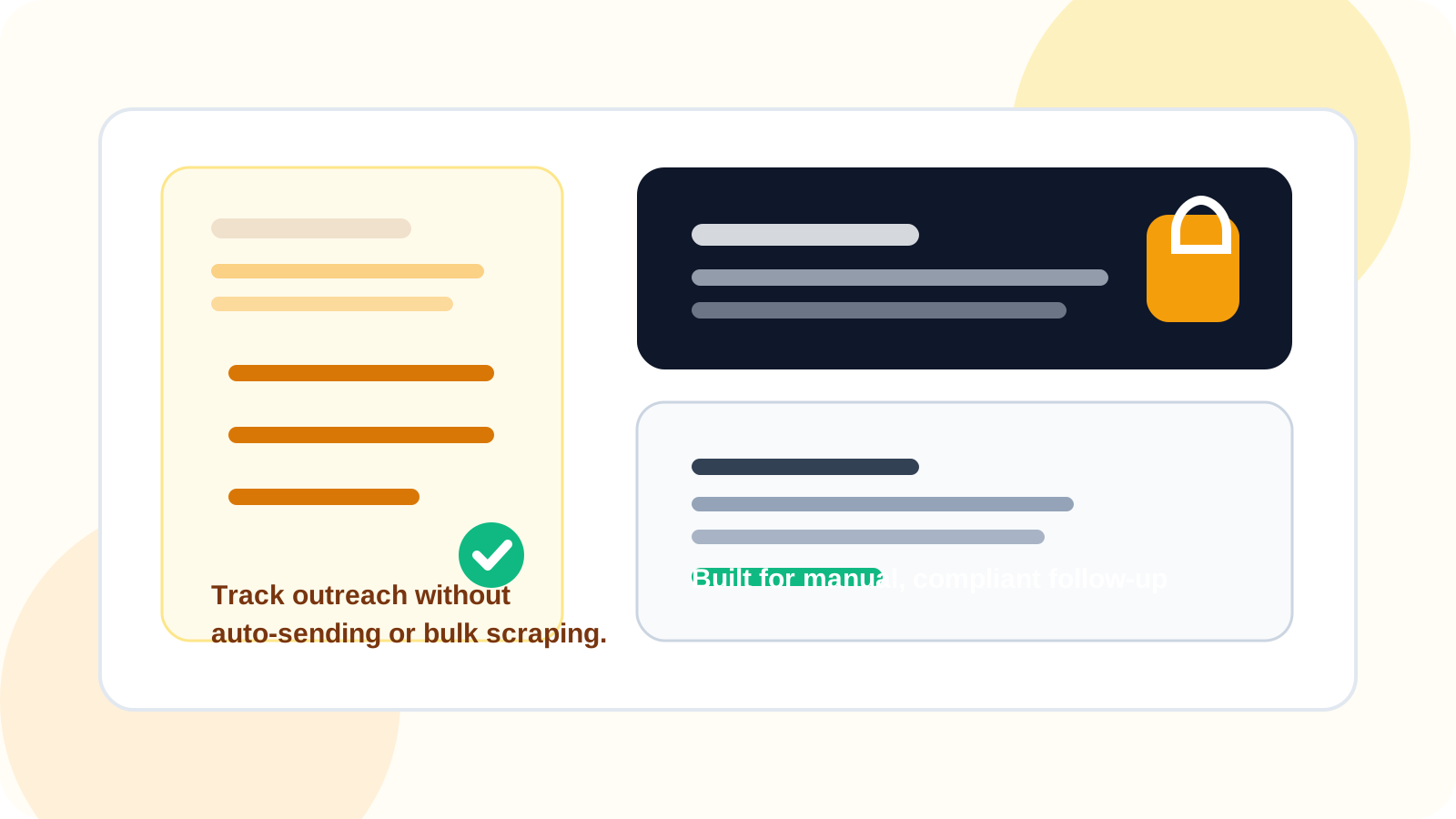
LinkedIn outreach compliance with TOS usually comes down to one principle: keep the human in control. If the tool helps you remember, organize, and prioritize while you still decide what gets sent, that is a very different workflow from automation that performs outreach actions on your behalf.
That distinction matters because many teams still need process discipline. They want reminders, templates, visibility, and reporting, but they do not want a system that turns LinkedIn outreach into unattended automation. The right answer is usually a safer manual workflow, not pure chaos and not aggressive auto-sending.
DMnesia was built around that middle ground. It works as a browser-native memory layer for pages you actively visit. It helps with manual tracking, follow-up reminders, reply detection, and template-assisted drafting, while avoiding automated sending, request acceptance, or bulk actions done in the user’s place.
What LinkedIn outreach compliance with TOS looks like in practice
Most teams do not need legal jargon. They need workflow clarity. Safer systems usually look boring in the best possible way: the rep stays in control, the tool stays supportive, and the process stays visible.
| Workflow area | Safer approach | Riskier approach |
|---|---|---|
| Contact capture | Track only profiles you actively visit and work | Build detached bulk lists through uncontrolled scraping |
| Message writing | Use templates as a starting point, then send manually | Auto-send sequences on your behalf |
| Follow-up execution | Use reminders and a due queue | Fire bulk nudges without active review |
| Team visibility | Share data intentionally through a portal or API | Create shadow exports and uncontrolled duplication |
How DMnesia supports a more compliant LinkedIn workflow
1. It starts from the pages you actively use
The tool is built around the profiles and conversations you are already working. That matters because it behaves like a personal productivity layer, not a background agent pretending to be you.
2. It does not send LinkedIn messages for you
This is the core line. DMnesia helps with memory and execution discipline, but it does not click send, accept connection requests, or run automated LinkedIn outreach actions on your behalf.
3. It gives manual outreach a structure worth keeping
Safer does not have to mean disorganized. DMnesia supports the process with a Today queue, extension badge reminders, reply detection, and a default day 3, 7, 14 cadence that can be customized to match the team’s motion.
4. It still gives teams room to grow
When companies need more visibility, the system expands through shared templates, team dashboards, and API-connected workflows. That is an important distinction from tools that try to deliver team scale primarily by automating rep behavior.
Operational test: if a tool helps a rep remember and prioritize, it is productivity support. If it starts performing LinkedIn actions for the rep, the compliance conversation becomes much sharper.
How to stay organized without drifting into risky automation
- Track only the people you are actively working instead of warehousing giant detached lead lists.
- Keep message sending manual even if reminders and templates support the workflow.
- Use reply-aware tracking so follow-ups stop when the conversation changes.
- Review overdue work daily rather than trying to solve inconsistency with automation volume.
- Separate personal execution from shared reporting so team visibility does not require risky behavior.
If you want the manual-first version of this operating model, read LinkedIn outreach without sending automated messages. If the buying question is broader than compliance and includes privacy and restraint, the next companion article is privacy-friendly LinkedIn outreach tracker. For teams specifically evaluating lower-risk positioning, compare this with LinkedIn tracker that does not get banned. If you need the manager and rollout angle, use LinkedIn outreach compliance with TOS for sales teams. If you are running the motion personally as a founder, the best next read is LinkedIn outreach compliance with TOS for founder-led outbound. If the workflow is candidate-facing instead of sales-facing, the recruiter-specific version is LinkedIn outreach compliance with TOS for recruiters.
Why compliant outreach still converts better than messy outreach
There is a practical sales argument here too. Teams that keep the process manual but structured tend to write better follow-ups, notice replies faster, and keep their data cleaner. That often creates better conversations than aggressive automation ever did.
Compliance is not just a policy concern. It is a workflow design choice. When the rep stays close to the message and the tool stays close to the memory problem, outreach tends to feel more human and easier to sustain. If you want to compare plans for that operating model, start on the DMnesia pricing page.
Use DMnesia for safer, manual LinkedIn follow-up
Keep LinkedIn outreach organized with reminders, reply awareness, and templates while every send stays human-controlled.
Install DMnesia for ChromeFrequently asked questions
What does LinkedIn outreach compliance with TOS mean in practice?
Usually that the human stays in control, messages are still sent manually, and the tool acts as a productivity aid rather than an automation bot performing outreach on your behalf.
Can a Chrome extension for LinkedIn outreach still fit a safer workflow?
Yes, if it helps with reminders, context, and organization instead of auto-sending messages or performing bulk LinkedIn actions for the user.
How does DMnesia approach LinkedIn outreach compliance?
DMnesia is designed as a browser-native tracker for pages you actively visit. It supports manual follow-up with reminders and reply awareness, but it does not automate outreach behavior.