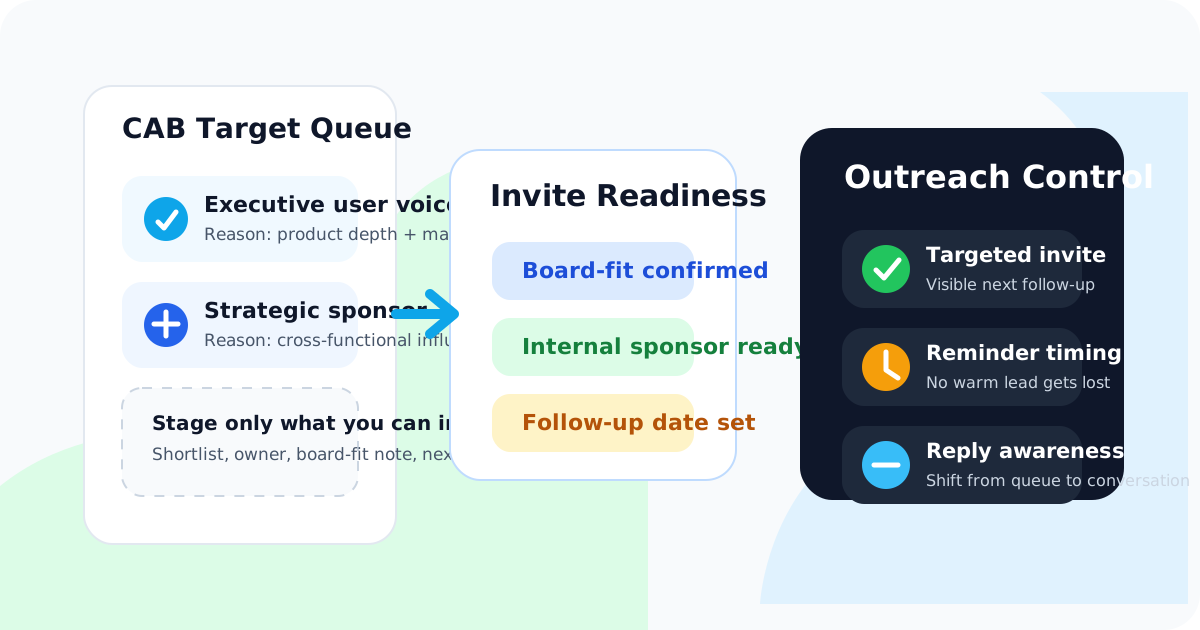
How to build a LinkedIn prospect pipeline before reaching out for customer advisory boards starts with selectivity. You need a small, high-context queue that captures who belongs on the board, why now, and what the next follow-up should be before the first invitation goes out.
Customer advisory board outreach is not ordinary prospecting. The ask is bigger, the relationship stakes are higher, and the list should be much tighter. If a team treats CAB invites like a normal outbound batch, the messages feel generic and the board loses credibility before it starts.
The better approach is to build a pre-outreach pipeline that protects context. Save likely members first, attach the reason they belong, and only move people into live follow-up once the internal motion is clear. DMnesia fits well here because reps can stage contacts in Target Leads, add a follow-up date once the outreach is ready, and keep everything visible inside the LinkedIn workflow instead of spreading it across tabs and notes.
If you need the broader framework first, start with how to build a LinkedIn prospect pipeline before reaching out. Teams building partner-sourced invite lists should also read the referral partnership version, and founder-led category teams can compare it with the founder-led category creation workflow.
Why customer advisory boards need a pre-outreach pipeline
Advisory boards work when the invite feels earned. That usually means the company already has a relationship, a clear point of view on why the stakeholder belongs, and a follow-up plan that does not drift once the first note is sent.
| Pipeline stage | What to capture | Why it matters |
|---|---|---|
| Candidate saved | Stakeholder, company, role, and board fit | You separate true candidates from interesting but vague names |
| Reason attached | Customer voice, market perspective, or executive influence | The invite message has a specific purpose |
| Internal sponsor named | Owner of the relationship or motion | Follow-up stays accountable instead of floating |
| Next action scheduled | Invite timing, reminder date, or hold decision | The list remains workable once attention shifts elsewhere |
What a strong CAB pipeline should include
A customer advisory board list does not need the volume of a sales queue, but it does need better judgment at the top.
- Board-fit reason so every prospect has a clear contribution angle.
- Relationship status so you know whether the outreach is warm, semi-warm, or still premature.
- Internal sponsor or team owner so no candidate is trapped in “someone should reach out.”
- Next follow-up date so the invite motion stays deliberate.
- Priority tier so the shortlist stays small and realistic.
This is also where DMnesia’s lighter structure helps. The tool is not trying to turn every advisory-board candidate into a full CRM project. It helps the operator keep the short list, the due reminders, and the reply visibility close to the LinkedIn profile where the relationship context already lives.
How to build the pipeline without overengineering it
1. Start from a shortlist, not a universe
Advisory boards are not broad-market campaigns. Start with the smallest list that still gives you enough perspective coverage. If the list is too big, the quality of the invite reasoning usually drops.
2. Save the stakeholder the moment the idea is real
Once a customer or strategic contact becomes a serious candidate, save the profile immediately. DMnesia’s tracking flow is useful here because the relationship owner can stage the contact before a final invitation sequence exists.
3. Attach one useful sentence about board fit
A pipeline entry should explain why this person belongs. That sentence might be about executive perspective, cross-functional credibility, a unique segment view, or hands-on product usage. If you cannot write the reason, the prospect is probably not ready.
4. Set the next move before leaving the profile
Even relationship-led CAB outreach fails when the team assumes they will circle back later. Use a reminder-driven workflow. DMnesia’s Today queue and customizable follow-up timing help keep the list active without forcing spammy outreach.
Operational shortcut: if the candidate list is growing but nobody can explain the next action for each person, the pipeline is collection-heavy and execution-light.
How CAB outreach differs from standard LinkedIn prospecting
The difference is not just tone. It is the workflow discipline around relevance and follow-through.
- Smaller queue because the bar for inclusion is higher.
- Higher-context messages because the invite needs a credible reason.
- Longer follow-up windows because advisory participation is a strategic ask.
- Faster reply handling because a warm answer should instantly change the plan.
That last point matters more than most teams expect. Once a candidate replies, the board motion should leave the generic reminder stack and move into a live conversation. DMnesia’s reply detection is practical here because it helps the relationship owner notice that shift fast.
Where DMnesia fits in the advisory board workflow
DMnesia is useful when the real problem is memory leakage, not lack of ambition. Teams can save CAB candidates, add reminders, use templates as structure for thoughtful invite drafts, and keep active conversations visible without losing the LinkedIn context that made the outreach worth doing in the first place.
If your team also needs a better way to rank the broader pool before building the CAB shortlist, use LinkedIn prospect pipeline scoring as the upstream companion.
People also ask about building a LinkedIn prospect pipeline for customer advisory boards
Why build a prospect pipeline before customer advisory board outreach starts?
Because advisory board invitations are selective and relationship-sensitive. A pre-outreach pipeline helps teams capture fit, role, timing, and next action before the first message goes out.
What should a customer advisory board LinkedIn pipeline track?
Track the stakeholder, company, reason they belong on the board, the internal sponsor or motion, and the next follow-up date so the invite process stays deliberate instead of improvised.
How many CAB prospects should be active at once on LinkedIn?
Usually fewer than a standard outbound queue. Customer advisory board outreach works best with a smaller, higher-context list that can be followed up with care.
Conclusion: build the shortlist before you send the invite
The strongest CAB outreach starts long before the invitation. If you build the LinkedIn prospect pipeline first, the eventual message is clearer, the follow-up is easier to manage, and the board itself looks more intentional.
Use DMnesia to keep your customer advisory board shortlist visible, organized, and follow-up ready while you decide who truly belongs at the table.
Keep advisory board outreach organized
Use DMnesia to save strategic LinkedIn contacts, schedule the next step, and keep selective outreach from slipping through the cracks.
Explore DMnesia featuresFrequently asked questions
Why build a prospect pipeline before customer advisory board outreach starts?
Because advisory board invitations are selective and relationship-sensitive. A pre-outreach pipeline helps teams capture fit, role, timing, and next action before the first message goes out.
What should a customer advisory board LinkedIn pipeline track?
Track the stakeholder, company, reason they belong on the board, the internal sponsor or motion, and the next follow-up date so the invite process stays deliberate instead of improvised.
How many CAB prospects should be active at once on LinkedIn?
Usually fewer than a standard outbound queue. Customer advisory board outreach works best with a smaller, higher-context list that can be followed up with care.