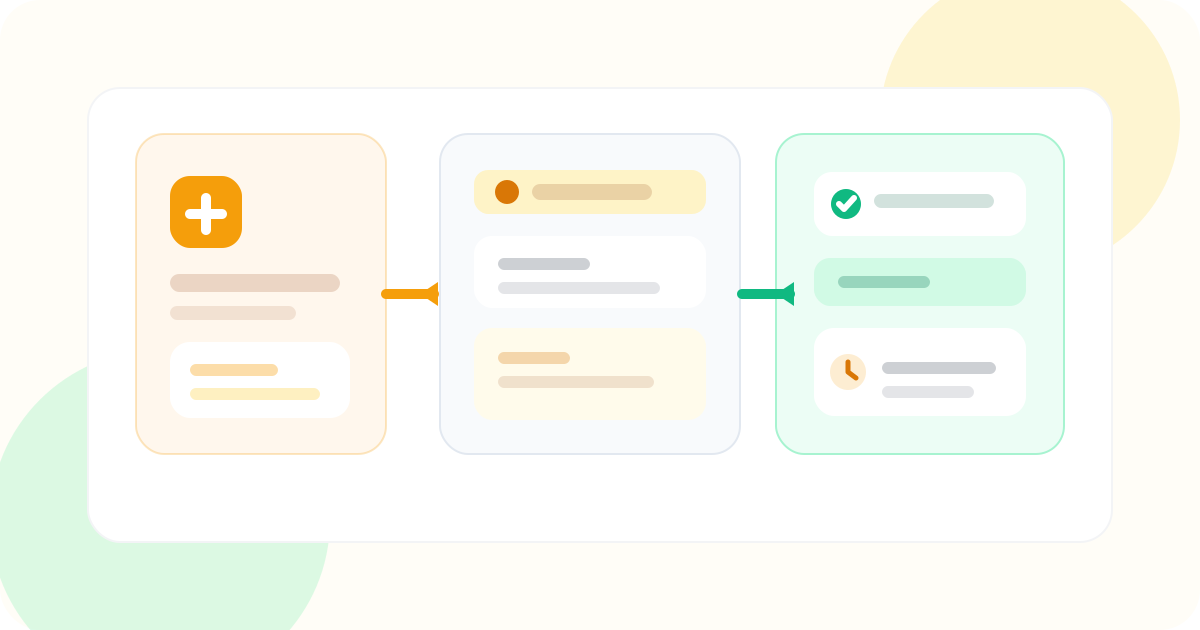
How to build a LinkedIn prospect pipeline before reaching out, in a founder-led category creation motion, comes down to one discipline: decide who really deserves your scarce attention before you start sending messages. The pipeline should separate future-fit names from active conversations and make every first touch feel earned instead of rushed.
Founder-led outreach is different from rep-led outbound in one important way: the founder is not just selling. They are also shaping how the market understands the problem. That means the prospect list cannot be built around generic title filters alone. It has to reflect who already feels the pain, who can recognize the category, and who is worth a message right now.
Without that pipeline, founders drift into a common mistake. They see an interesting profile, send a message too early, then realize a day later that the person was curious but not truly in-market. The conversation becomes harder to recover because the opening was early, vague, or too product-first.
That is why the main guide on how to build a LinkedIn prospect pipeline before reaching out is useful, but not enough for this motion. Category creation needs one extra layer: a pipeline that stores proof, timing, and message angle before the founder ever asks for a call.
Why founder-led category creation needs a different pipeline
In category creation, the buyer usually does not wake up searching for your exact product category. They are often aware of a messy workflow, a missing system, or a recurring revenue leak, but they have not named the problem the way you have. That means your prospect pipeline has to help you decide two things before outreach starts:
- Do they feel the underlying pain? Category creation fails when the prospect has no reason to care yet.
- Do you have a credible angle? A founder message lands better when it is tied to a visible workflow problem or current signal.
- Is the timing good enough? If the company is in the wrong moment, even a strong idea gets ignored.
| Pipeline state | What the founder should know | What happens next |
|---|---|---|
| Watch | The profile fits, but no strong reason-now signal exists yet | Save the profile and wait for a better moment |
| Category-ready | The person has visible pain or context that supports a category-opening message | Prepare a first-touch angle and supporting proof point |
| Active follow-up | The message has been sent and the next step is already defined | Move into reminder-based follow-up with reply awareness |
The minimum viable founder-led LinkedIn prospect pipeline
You do not need a giant CRM project to do this well. You need a shortlist that answers the same questions every time.
1. Save the right profile, not every interesting profile
Founders often over-save because curiosity is high. Resist that. Save people who match your ideal problem pattern, not just the right logo or title. The goal is a pipeline you can actually work through, not a list that makes you feel productive.
2. Attach the category-opening reason now
Before the first message, write down why this person might understand the problem. Maybe they run outbound personally. Maybe they just hired their first sales rep. Maybe their team is clearly doing work in LinkedIn without a visible system around it. If you cannot name the angle, the profile stays upstream.
3. Separate pre-outreach targets from live follow-up
This is where DMnesia is especially useful for founder-led selling. The Target Leads layer gives founders a place to stage prospects before they become active contacts. Once the conversation starts, the contact can move into the regular follow-up flow with reminders, templates, and reply visibility. That separation keeps active work clean.
4. Decide the second touch before sending the first
Category creation messages rarely convert on touch one. That does not mean the first note failed. It means you need a follow-up that deepens the problem framing instead of repeating yourself. Founders who plan the second touch before the first one goes out stay calmer and sound less desperate later.
Founder rule: if your pipeline cannot tell you why the person matters, why now matters, and what the next touch should do, the list is not ready for outreach yet.
What to keep visible in the pipeline before sending the first message
The best founder-led pipelines are not long. They are visible. Four pieces of context matter most:
- Category angle so the opening message sounds specific.
- Proof point so you can make the claim believable, not abstract.
- Pipeline stage so future-fit names do not crowd out active conversations.
- Next follow-up timing so no promising thread depends on memory.
If you already know you want a founder-friendly memory layer for that work, the right companion read is LinkedIn outreach tracker for founder-led sales. That page focuses on day-to-day operating discipline once the queue is already forming.
For the follow-up rhythm after the first message, pair this with Day 3 Day 7 Day 14 follow-up cadence for founder-led sales. The pipeline article answers who and why; the cadence article answers when.
A practical founder-led workflow from prospect to first conversation
A clean category-creation flow usually looks like this:
- Save a profile into a target queue only when the problem pattern is clear enough to explain later.
- Add one note about the angle so the first message starts from buyer context, not founder enthusiasm alone.
- Promote the profile to active tracking once the first touch is ready.
- Set the next reminder immediately so the second touch exists before the tab closes.
- Pause the reminder chain when the person replies so the live conversation takes priority.
That last step matters more than most founders expect. In category creation, one good reply can shift the whole motion because the conversation often includes real market language. DMnesia’s reply detection helps bring those live threads back to the top before a stale reminder or generic follow-up damages the tone.
Where founders usually overcomplicate the pipeline
The mistake is not lack of sophistication. It is too much sophistication too early. Founders often build elaborate tags, custom fields, and reporting ideas when what they really need is a shorter list with stronger reasons.
Use only the structure that improves behavior:
- Short target queue so attention stays intentional.
- Clear active queue so follow-ups do not disappear.
- Simple reminder rhythm so the system survives busy weeks.
- Reusable templates so blank-page friction does not slow founder outreach.
If you are already comparing browser workflow versus heavier CRM behavior, the article on LinkedIn CRM Chrome extension for founder-led sales covers the product-shape decision from a founder perspective.
People also ask about how to build a LinkedIn prospect pipeline before reaching out
Why should founders build a LinkedIn prospect pipeline before outreach starts?
Because founder-led category creation depends on relevance and timing more than raw volume. A pre-outreach pipeline helps founders decide who deserves a first message, why now matters, and what follow-up should happen if the conversation opens.
What should be in a founder-led LinkedIn prospect pipeline?
At minimum, include the profile, company, category angle, proof point, current stage, and next action. That keeps warm prospects separate from vague ideas and makes follow-up easier to trust.
Can I run this kind of pipeline without a heavy CRM?
Yes. Many founders start with a browser-native workflow that saves the right profiles, stages future targets, and sets reminder timing before they need a full team CRM process.
Conclusion: build the category queue before you ask for attention
The strongest founder-led outreach does not start with messaging. It starts with selection. Build a LinkedIn prospect pipeline before reaching out, and you give yourself a better opening, a calmer follow-up plan, and a much better chance of teaching the category without sounding premature.
Use DMnesia to keep that pipeline visible, separate future-fit leads from active follow-up, and stop warm founder conversations from slipping away between product work, hiring, and customer calls.
Keep founder-led LinkedIn prospecting organized
Use DMnesia to stage target leads, set the next follow-up, and keep category-creation outreach visible without a heavy CRM layer.
Explore DMnesia featuresFrequently asked questions
Why should founders build a LinkedIn prospect pipeline before outreach starts?
Because founder-led category creation depends on relevance and timing more than raw volume. A pre-outreach pipeline helps founders decide who deserves a first message, why now matters, and what follow-up should happen if the conversation opens.
What should be in a founder-led LinkedIn prospect pipeline?
At minimum, include the profile, company, category angle, proof point, current stage, and next action. That keeps warm prospects separate from vague ideas and makes follow-up easier to trust.
Can I run this kind of pipeline without a heavy CRM?
Yes. Many founders start with a browser-native workflow that saves the right profiles, stages future targets, and sets reminder timing before they need a full team CRM process.