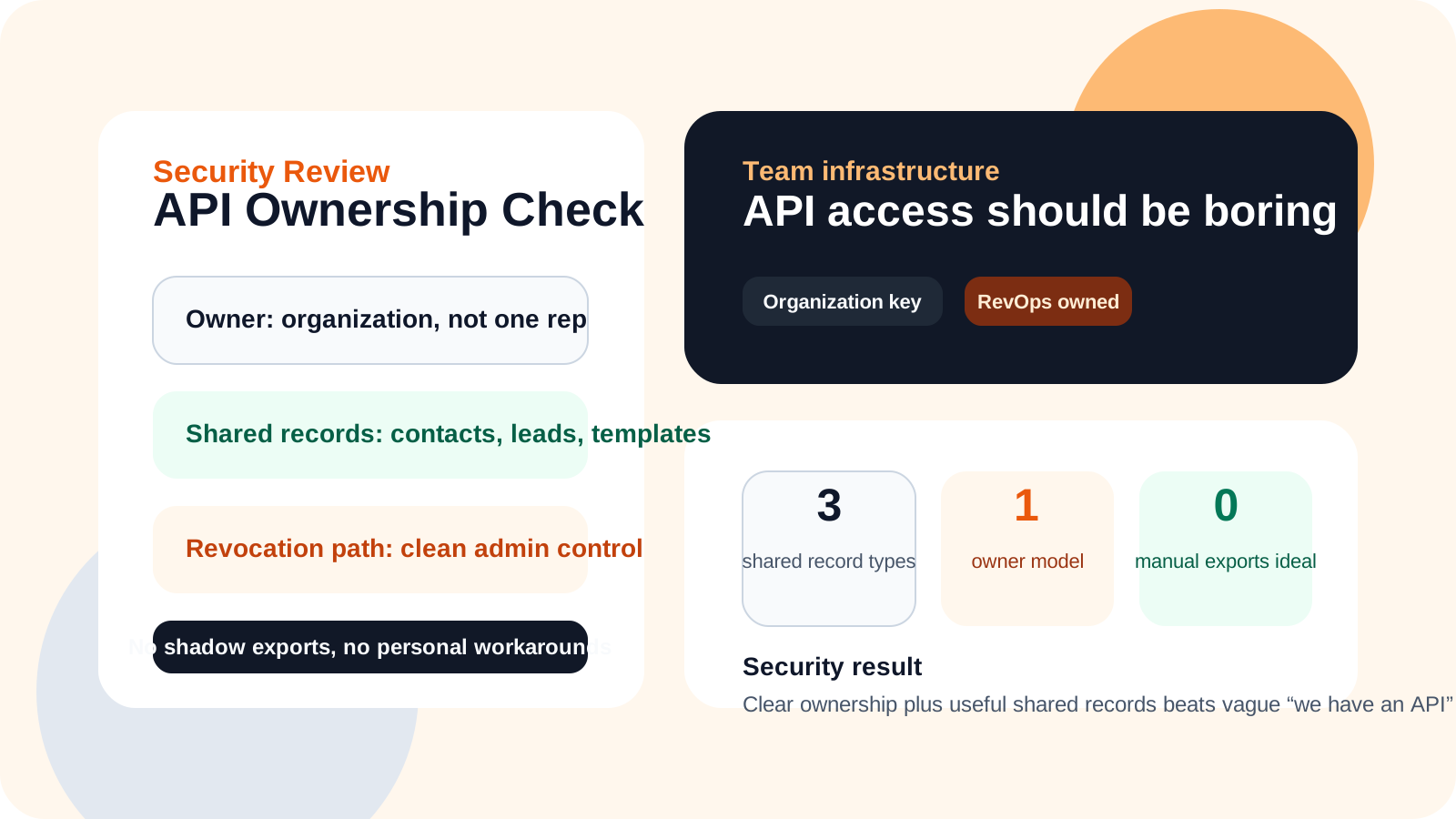
A LinkedIn outreach tool with API access should survive a security review, not just a demo. Buyers need clarity on ownership, shared records, access revocation, and how the API fits the organization instead of becoming a workaround tied to one rep.
That question shows up late in the buying cycle, but it should not be treated as paperwork. Once outreach data starts feeding CRMs, analytics layers, routing logic, or billing-backed team workflows, API access becomes part of operating infrastructure. RevOps, IT, and the team owner all need a clean answer to who controls it and how it can be shut down or expanded responsibly.
This is where a lot of vendor pages stay vague. “We have API access” sounds useful, but it does not explain whether the integration belongs to the organization, whether the right shared records exist, or whether access can be managed without depending on an individual rep’s setup. That is why a separate security-and-ownership review is worth doing even after the broader API-access buyer guide and RevOps checklist.
What security reviewers should ask first
| Review area | What good looks like | What creates risk |
|---|---|---|
| Ownership | API access belongs to the organization or team owner | Keys tied to one rep or informal personal workflows |
| Shared records | Contacts, leads, and team assets are clearly defined | Vague or partial data exposure that encourages exports |
| Revocation path | Admins can remove access cleanly when ownership changes | No clear path to rotate or retire access |
| Workflow safety | API use reduces manual workarounds and double entry | Teams still depend on fragile CSV handoffs or shadow tools |
Why this review matters for commercial buyers
Security questions are really ownership questions
Most teams do not reject an outreach product because APIs exist. They reject it when nobody can explain who should control the integration once the original rep, manager, or contractor changes roles. A safe answer usually puts ownership at the team or organization level, not the individual seat level.
Weak API ownership creates more shadow operations
When teams do not trust the official integration path, they start exporting files, forwarding spreadsheets, or building one-off sync routines that never become stable. Ironically, that increases security and reliability risk. A cleaner API story should reduce improvisation, not force more of it.
Billing and admin workflow matter too
Commercial buyers often separate “security” from “procurement,” but the two are connected. If a team is buying organization seats, shared templates, and API access together, the ownership model should line up with how the team is billed and administered. That is why some buyers pair this review with the Stripe billing guide and broader CRM integration reads like this HubSpot or Salesforce integration guide.
Security shortcut: if the vendor cannot explain who owns the integration, how access is revoked, and which shared records are exposed, the API is not ready for production trust.
How DMnesia fits a security review
DMnesia approaches API access as part of the organization layer rather than as an individual-rep hack. That matters because the underlying shared records buyers care about are team records: tracked contacts, target leads, and shared templates. The product is designed so the rep workflow stays inside LinkedIn while the team layer handles the shared operational surface.
That separation is commercially useful. SDRs and account teams can keep a fast browser-native workflow without taking on extra admin, while RevOps and leadership still get a path into the broader stack. Teams evaluating how far they want that connection to go should also read the HubSpot API guide.
Questions to ask in the live review meeting
- Who owns the API connection after the rollout? The answer should point to the organization, not one rep.
- Which shared records are available? Buyers should hear contacts, target leads, and shared templates clearly.
- How is access revoked or rotated? Admin control should be straightforward.
- What manual workaround disappears because of the API? A strong answer reduces exports and duplicate entry.
- How does the API fit the team workflow without slowing reps down? That is the core adoption-security balance.
Those questions help buyers avoid a common mistake: treating API access as an abstract checkbox instead of a real operational surface. The best tools answer them directly, and the answer should sound boring in the best possible way. Boring means ownership is clear, records are understood, and no one is improvising.
People also ask about security review for API access
Who should review security for a LinkedIn outreach tool with API access?
RevOps, IT, and the team owner should review it together because API access affects ownership, access control, and how outreach data reaches the rest of the sales stack.
What should buyers ask about API access security?
Ask who owns the keys, what shared records are exposed, how access is revoked, whether the integration belongs to the organization, and whether the API removes risky manual workarounds.
Does DMnesia fit a security review for API access?
Yes. DMnesia frames API access at the organization level so shared outreach data can be managed as team infrastructure rather than as an individual rep workaround.
Conclusion: secure API access should feel operationally boring
The right LinkedIn outreach tool with API access should make security reviewers calmer, not more creative. Clear ownership, clear records, and clean revocation paths are what let the product become part of the team’s actual operating system.
That is the direction DMnesia takes. Reps stay close to LinkedIn, the organization owns the shared workflow layer, and API access can be reviewed as a normal part of team infrastructure instead of a shadow exception.
Review DMnesia for secure team API ownership
Use DMnesia to keep rep workflow browser-native while shared outreach data stays organized at the team layer for integrations and reporting.
Explore Team AccessFrequently asked questions
Who should review security for a LinkedIn outreach tool with API access?
RevOps, IT, and the team owner should review it together because API ownership affects data flow, admin control, and downstream reporting.
What should buyers ask about API access security?
Ask about ownership, shared records, revocation, team-vs-individual control, and which manual workarounds the API is meant to replace.
Does DMnesia fit a security review for API access?
Yes. It treats API access as an organization-level capability so the team can manage shared outreach data with clearer ownership.