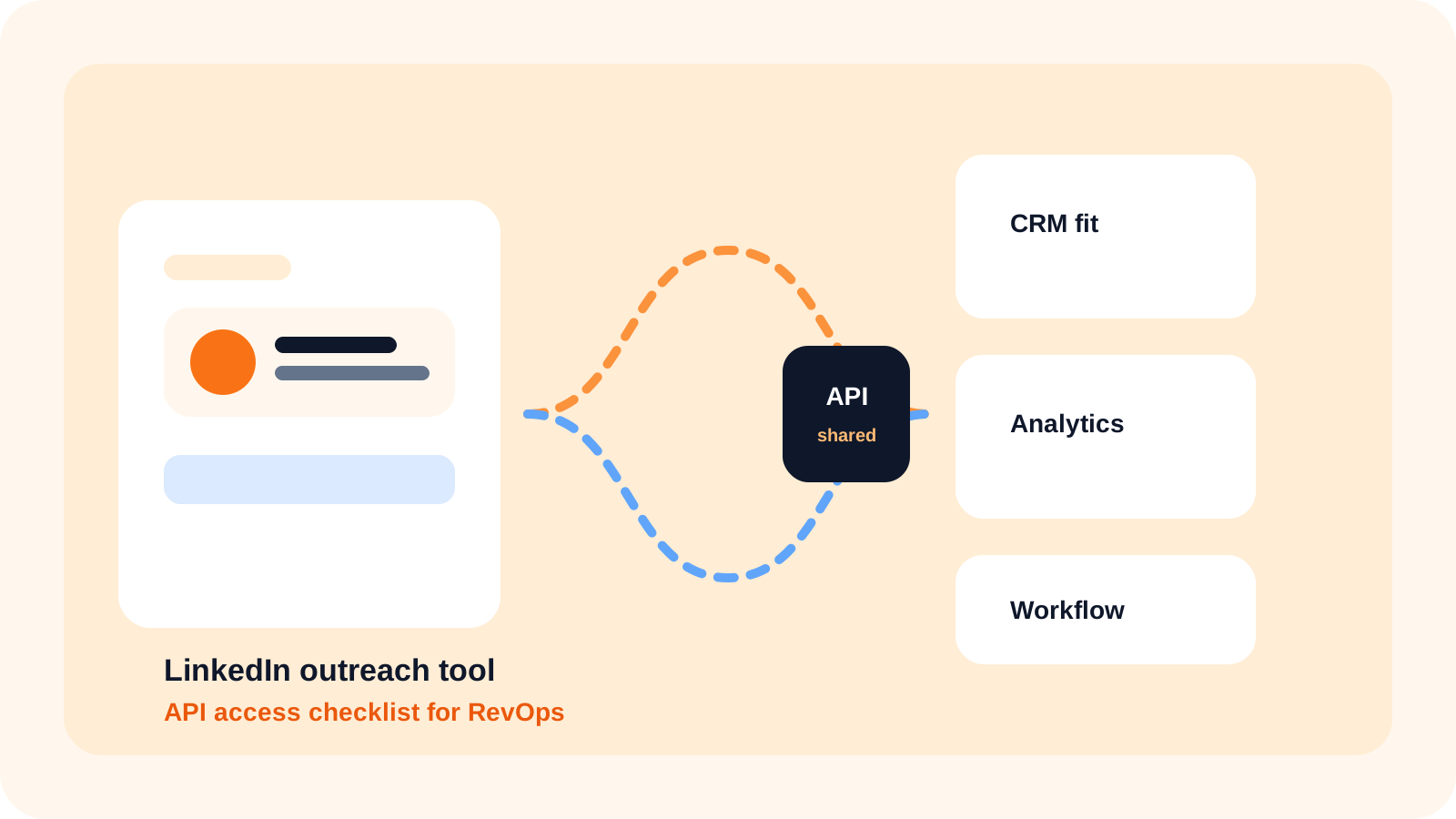
A serious LinkedIn outreach tool with API access should do more than expose raw data. Buyers should expect team-owned access, useful shared records, CRM-ready workflows, and controls that let RevOps trust the integration without adding manual work back onto reps.
The phrase LinkedIn outreach tool with API access usually signals a more mature buying stage. The team already knows the browser workflow matters. The open question is whether the product can graduate from a rep tool into shared sales infrastructure.
That is exactly where many evaluations get fuzzy. A vendor says “we have an API,” but buyers still do not know whether the API is team-owned, whether it exposes the records RevOps actually needs, or whether it can support CRM hygiene without turning into another fragile export process.
DMnesia is shaped around that next-stage question. The rep workflow remains browser-native, but the team layer can expose shared contact, lead, and template data for broader systems. That split matters because RevOps wants trustworthy data flow without slowing the rep side that made the product useful in the first place.
LinkedIn outreach tool with API access checklist
| Checklist item | What good looks like | What to avoid |
|---|---|---|
| Ownership model | API access belongs to the organization, not a single rep account. | An integration tied to one employee’s login. |
| Shared records | Contacts, target leads, and templates are available for downstream workflows. | Only partial activity data or disconnected export files. |
| CRM fit | The data layer supports routing, enrichment, and reporting use cases. | An API that exists but does not help the actual RevOps model. |
| Permission control | Admins can manage who has access and how the team uses it. | Vague security ownership and unclear revocation paths. |
| Rep workflow impact | Reps keep working inside LinkedIn without double entry. | The integration only works if sellers update a second system manually. |
Why RevOps buyers care about API access
They want cleaner reporting than manual exports can provide
Manual CSV handoffs always look manageable at the beginning. They fail later, when leadership starts asking for fresher data or when multiple reps use the system differently. RevOps wants a cleaner way to pull shared records into the wider stack.
They need team context, not just rep actions
A buyer asking about API access rarely wants just message counts. They want records that can support ownership, routing, reporting, and handoff logic. That is why the generic guide on LinkedIn outreach tool with API access is only the starting point. The shortlist question is more specific: can this tool support the actual operating model?
They need the data layer to mature with the rollout
API access matters most when a product expands from rep utility to system component. Teams usually pair that conversation with adjacent rollout questions like the security review guide for API access, LinkedIn API for HubSpot integration, and how to integrate LinkedIn outreach data into HubSpot or Salesforce.
RevOps shortcut: if a vendor cannot show who owns the integration, what shared records exist, and how the API avoids rep double entry, the API story is not ready for production scrutiny.
Questions to ask every API-access vendor
- Which records are exposed? Contacts alone are rarely enough for useful downstream workflows.
- Is the API team-owned? RevOps should not depend on one rep keeping the integration alive.
- How does the API support CRM alignment? The answer should map to routing, attribution, reporting, or enrichment.
- What happens when the team grows? Shared templates, reporting, and seats usually become part of the same buying motion.
- Does the rep workflow stay simple? API maturity should not come at the cost of adoption.
This is where DMnesia stands out. The product begins with rep-side clarity, then exposes the organization layer when the team needs broader system behavior. That is a better path than asking RevOps to own a brittle integration for a tool reps barely use.
How DMnesia fits the API-access checklist
- Organization-level API access keeps ownership on the team side.
- Shared records can include tracked contacts, target leads, and templates.
- Browser-first rep workflow keeps the action layer close to LinkedIn.
- Expansion path into reporting and CRM systems supports the broader revenue stack.
That architecture is especially useful for teams already building the business case in the LinkedIn CRM for SDRs ROI playbook. A believable ROI story needs believable downstream data. API access is often how buyers close that gap.
People also ask about LinkedIn outreach tools with API access
What should buyers expect from a LinkedIn outreach tool with API access?
Buyers should expect team-owned access, shared contact and lead records, useful reporting fields, clear permission control, and a realistic path into CRM or analytics systems.
Why does RevOps care about API access in LinkedIn outreach tools?
RevOps cares because API access reduces manual exports, makes outreach data more trustworthy, and lets LinkedIn workflow support forecasting and CRM hygiene without extra rep admin.
Does DMnesia support API-ready team workflows?
Yes. DMnesia supports team API access so organizations can use shared contact, target lead, and template data in broader workflow and reporting systems.
Conclusion: API access should make outreach more governable, not more fragile
The best LinkedIn outreach tool with API access is the one that helps RevOps trust the data while preserving the browser-native workflow that made the tool useful to reps. Good API design is an operating decision, not just a technical one.
That is the position DMnesia is moving toward: a lightweight rep experience with a team-owned data layer behind it, so the rollout can scale without falling back to exports and guesswork.
Compare DMnesia for API-ready LinkedIn outreach
Use DMnesia to keep rep workflow inside LinkedIn, then connect shared outreach records to the wider RevOps stack when the team is ready.
Open the Team PortalFrequently asked questions
What should buyers expect from a LinkedIn outreach tool with API access?
Look for team ownership, shared records that matter, CRM-ready design, and an integration story that does not depend on extra rep logging.
Why does RevOps care about API access in LinkedIn outreach tools?
Because it turns browser activity into data the wider revenue system can trust without dragging sellers into spreadsheet work.
Does DMnesia support API-ready team workflows?
Yes. DMnesia supports API-ready shared workflows for organizations that want LinkedIn outreach data in broader systems.