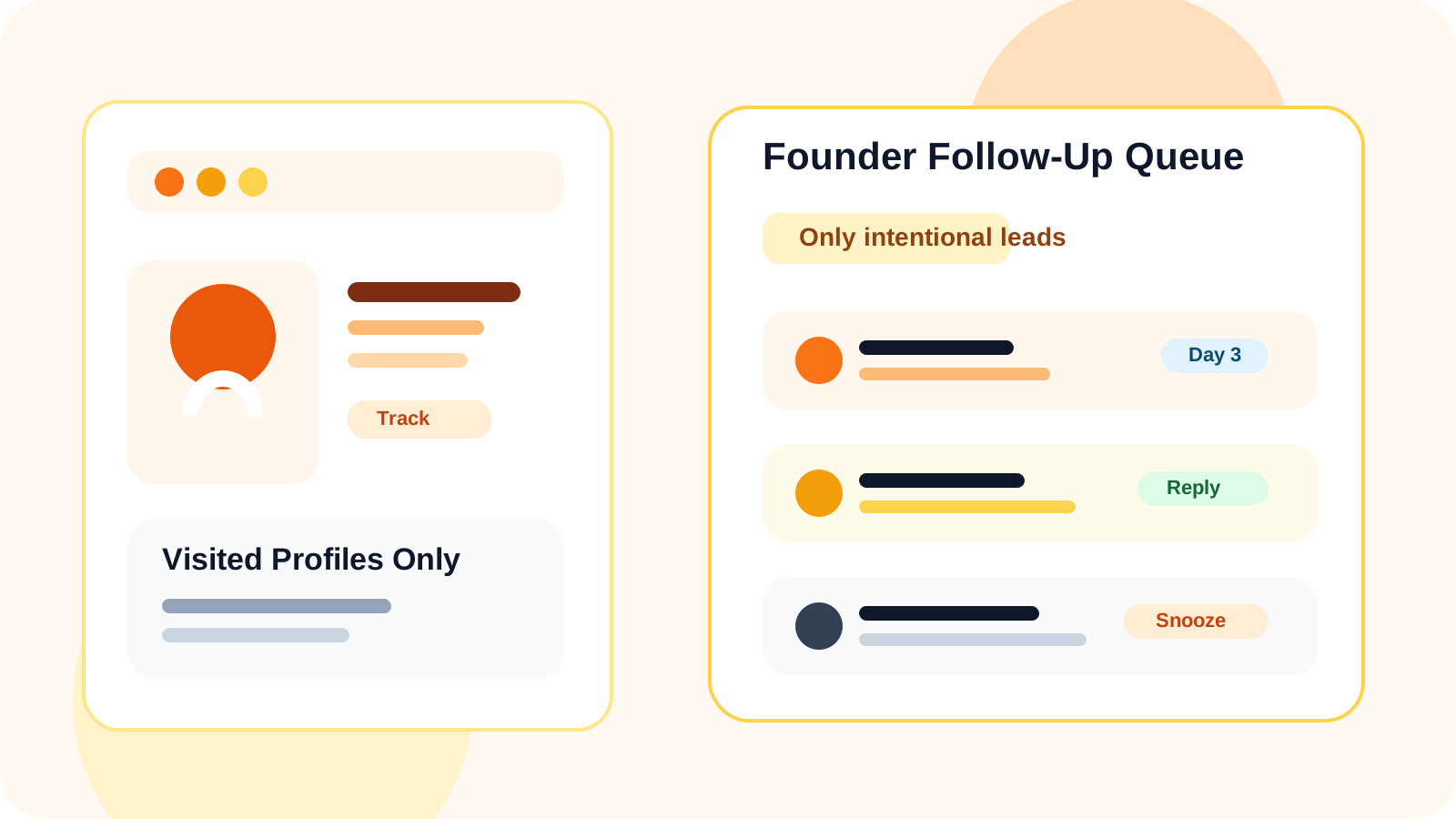
Yes, there is a LinkedIn CRM that works only on profiles you visit for founder-led sales, and that model is usually the cleanest fit when you want discipline without building a full sales stack too early. It keeps tracking tied to real conversations instead of broad collection or constant CRM maintenance.
Founders do not usually need more contacts. They need more focus. A founder-led sales motion breaks when every prospecting idea turns into a record, a field update, and another system to maintain. The attraction of a profile-only LinkedIn CRM is simple: if you intentionally opened the profile, the system appears. If you did not, it stays out of the way.
That workflow matters in 2026 because many founder-led motions still live in the browser, not in a complex SDR stack. The founder researches an account, opens a profile, sends a DM, then moves back into product, fundraising, recruiting, or customer work. A tool that only activates on visited profiles matches that reality better than a bloated CRM rollout.
DMnesia is built around this browser-native approach. It lets founders track profiles in one click, run a due queue, use lightweight templates, detect replies, and stay mostly local-first until the business actually needs sync, dashboards, or integrations.
Why founders look for profile-only LinkedIn tracking
This keyword sounds technical, but the buying intent is emotional and operational. Founders want control. They want less overhead, less noise, and less distance between the conversation and the follow-up system.
| Founder concern | What a heavy system causes | What a profile-only workflow fixes |
|---|---|---|
| Too much admin | Every prospect needs logging before the relationship is even real | Only save people you deliberately work |
| Loss of focus | Huge lists create false pipeline volume | Keeps the queue tied to real visited profiles |
| Premature complexity | Integrations and reporting arrive before process discipline exists | Starts simple, then expands only when needed |
That last point matters most. Founders often do not need an enterprise-grade CRM layer on day one. They need a consistent way to remember who deserves the next message.
What a profile-only LinkedIn CRM should do for founder-led sales
1. Appear only when the founder is already in context
If you are on a real LinkedIn profile or message thread, the tool should feel useful immediately. If you are not, it should not demand attention. That is the defining advantage of a profile-only system.
2. Turn visited profiles into real next actions
The tool should not just capture names. It should create follow-up timing. Once a founder saves the contact, the workflow needs to answer when the next message is due, whether the person replied, and whether the thread should be snoozed or archived.
3. Keep the system small enough to trust
Founder-led sales works best when the queue stays believable. If the system collects too many weak prospects, the founder stops trusting it and falls back to memory. A profile-only workflow acts as a natural filter because only intentionally visited people enter the list.
Founder rule: if a follow-up tool makes you feel like you need a sales ops hire before you have repeatable outbound, it is too heavy for the stage you are in.
Where a browser-native CRM layer beats a full CRM early on
There is no prize for adopting complexity too soon. For founder-led outreach, the browser often beats the CRM in the earliest stage because the work is happening in real time while the founder is researching and messaging.
- Browser-first wins when you need fast profile capture, a due queue, and lightweight reply awareness.
- CRM-first wins later when multiple reps, structured reporting, and handoffs become normal.
- The cleanest path is a tool that starts browser-native and can grow with the company later.
That is why many founders want a system that only works on profiles they visit. It proves its value in the moment of work instead of asking for discipline before it gives any back.
How DMnesia fits this founder workflow
DMnesia gives founders a focused memory layer inside LinkedIn. You save the profile when intent is real, work off a Today queue, notice replies, and keep the motion manual-first. Free mode stays local-first, while paid paths open up cloud sync, team dashboards, and API-connected reporting later.
- One-click profile tracking keeps you from losing warm prospects between product and sales tasks.
- Default follow-up timing helps founders stay consistent without building a process from scratch.
- Reply-aware queue cleanup protects tone once a prospect responds.
- Gradual expansion lets the same workflow grow into a team system if the company scales outbound.
If you want the general version of this idea, start with the main guide to a LinkedIn CRM that works only on profiles you visit. If you are comparing founder-stage operating models more broadly, the adjacent reads are best way to track LinkedIn follow-ups in 2026 for founder-led sales, LinkedIn CRM Chrome extension for founder-led sales, and private LinkedIn tracker without automation.
People also ask
Is there a LinkedIn CRM that works only on profiles I visit for founder-led sales?
Yes. A browser-native CRM layer can activate only when you intentionally open a profile or conversation, which keeps founder-led sales tracking focused on real outreach instead of broad background collection.
Why do founders prefer profile-only tracking?
Founders usually want low admin, less noise, and better control over who enters the system. Profile-only tracking stays close to the real work and avoids bloated CRM upkeep.
Can a founder start profile-only and still grow into a team workflow?
Yes. The best systems start lightweight for solo execution, then expand into sync, dashboards, and integrations only when the company actually needs that complexity.
Conclusion: founder-led sales needs focus before scale
If you are asking whether there is a LinkedIn CRM that works only on profiles you visit, you are probably not looking for less structure. You are looking for the right amount of structure. Founder-led sales improves fastest when the tool supports the moment of outreach without surrounding it with too much process too early.
DMnesia is a strong fit for that phase because it keeps profile-based tracking, reminders, and reply awareness inside the browser first, then opens up more surface area only when your sales motion earns the need for it.
Keep founder outreach focused on the profiles you actually work
Use DMnesia to save visited profiles, follow up on time, and add team or integration layers only when your outbound motion is ready for them.
Install DMnesia for ChromeFrequently asked questions
Is there a LinkedIn CRM that works only on profiles I visit for founder-led sales?
Yes. Browser-native tools can stay dormant until you intentionally open a profile or DM thread, which keeps founder-led sales tracking focused and manual-first.
Why is that useful for founders?
It reduces admin, limits noise, and helps founders work from a believable queue instead of a giant list of vague prospects that never become real conversations.
When should a founder add more CRM complexity?
Usually when multiple reps, formal handoffs, shared dashboards, or RevOps reporting become recurring needs. Until then, a profile-only workflow is often the cleaner operating layer.