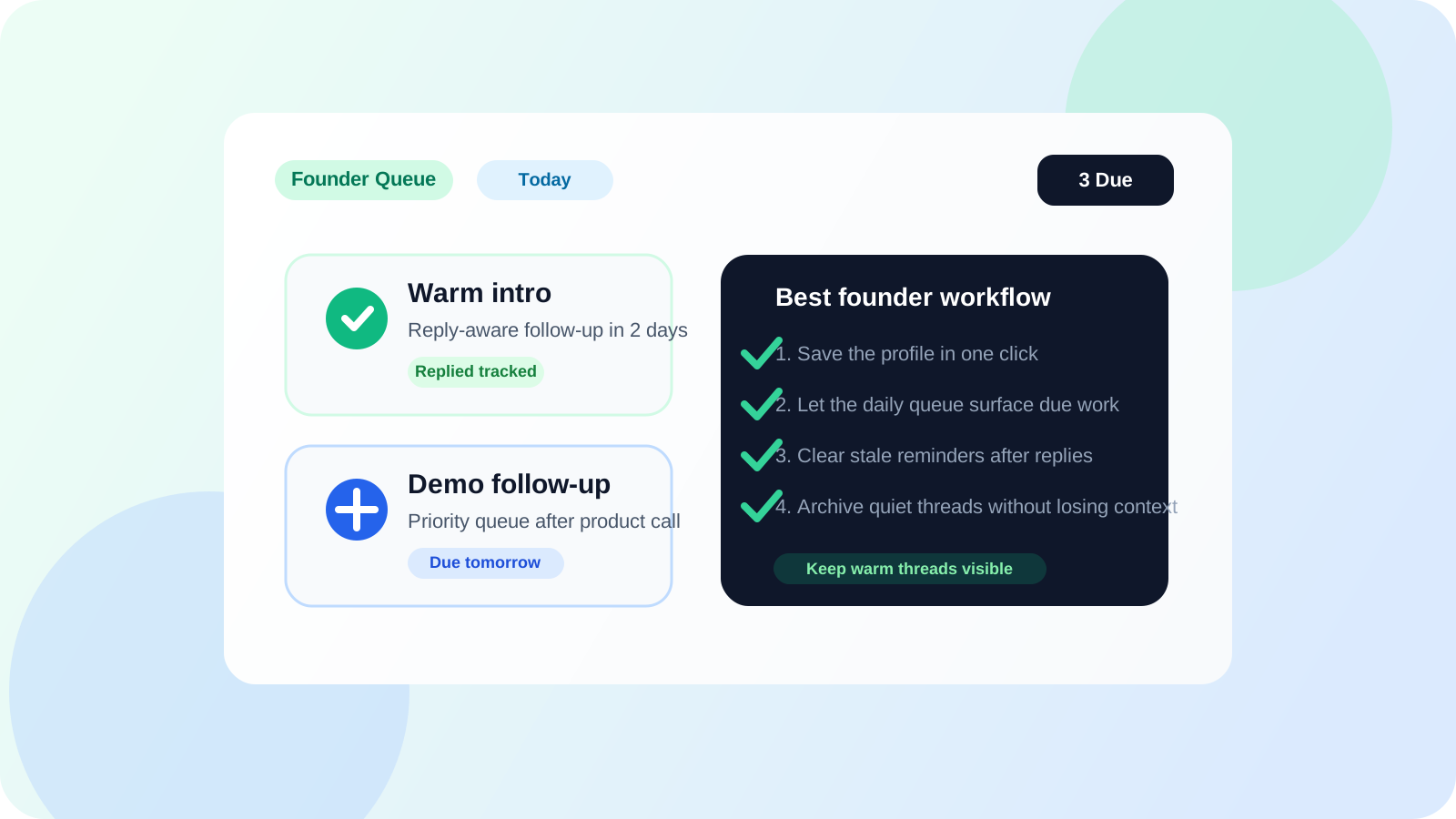
The best way to track LinkedIn follow-ups in 2026 for founder-led sales is to use a lightweight browser-native queue that captures warm contacts fast, shows who is due today, and clears stale reminders after replies. Founders need momentum, not another system that turns ten minutes of outreach into thirty minutes of admin.
Founder-led sales breaks when memory becomes the operating system. One day you are shipping product, the next day you are recruiting, fundraising, handling support, and trying to remember which prospect said “circle back next week.” The problem is rarely effort. The problem is fragmented attention.
That is why the best answer for founders is different from the generic answer for full-time SDR teams. A founder needs a follow-up workflow that starts instantly on a LinkedIn profile, survives interruptions, and returns the next action without forcing a full CRM ceremony.
Why founder-led sales needs a different follow-up system
When founders look for the best way to track LinkedIn follow-ups in 2026, they are usually comparing against three bad options: memory, notes, or a CRM they do not want to open for every micro-conversation.
| Common founder setup | What it gets right | Where it breaks |
|---|---|---|
| Mental notes | Zero friction in the moment | Warm threads vanish as soon as the day gets busy |
| Personal task list | Easy to create reminders | No profile context, reply status, or relationship history |
| Heavy CRM logging | Strong record keeping | Too much overhead for fast founder-led outreach |
| Browser-native tracker | Context, reminders, and execution stay close together | Needs disciplined queue cleanup to stay sharp |
Founders do not need an abstract dashboard first. They need a repeatable way to avoid losing warm conversations while context is still fresh.
What the best founder follow-up workflow should include
1. Instant profile capture
If the founder needs to tell themselves “I’ll log this later,” the system is already too slow. The right workflow starts directly from the LinkedIn profile or message thread, saves the person immediately, and preserves enough context to act later without re-reading the entire conversation.
2. A short daily queue
Founders should not open a tool and face an endless backlog. The queue should answer one question fast: who deserves attention today? DMnesia’s Today tab and badge notifications fit this pattern because they reduce scanning and help founders restart quickly after context switches.
3. Reply-aware reminders
Founders often return to LinkedIn in short bursts. That makes stale reminders more dangerous. If someone already answered, the system should stop nudging that thread as overdue. If reply awareness is central to your process, the deeper workflow is in how to detect when a LinkedIn lead has replied.
4. Templates without robotic behavior
Founders benefit from saved language because they are switching between ICPs, intros, and follow-up asks. But the template layer should remove blank-page friction, not turn every message into lifeless copy. The best system supports judgment instead of replacing it.
Founder rule: if the follow-up system takes longer to update than it takes to send the message, it will stop being used the moment the calendar gets crowded.
A practical founder-led workflow in 2026
The strongest founder-led process is simple. Save the profile when a real conversation starts. Let the queue surface due follow-ups. Clear or pause the reminder when a reply comes in. Archive the thread when it is no longer active. That is enough structure to stay consistent without building an operations department around yourself.
| Founder moment | Best next action | What the tracker should do |
|---|---|---|
| After a strong first reply | Schedule the next touch clearly | Keep the contact visible on the right day, not every day |
| After a product demo or intro | Follow up while momentum is still warm | Promote the contact into the daily queue at the agreed timing |
| After a quiet week | Re-open only the best warm threads | Show a clean due list instead of a pile of notes |
Where DMnesia fits for founder-led sales
DMnesia is a good fit for founder-led LinkedIn outreach because it keeps the execution layer inside the browser. Founders can save profiles in one click, work from a due queue, rely on reply-aware tracking, and use message templates without pretending every warm relationship needs a full CRM motion.
- Free plan works for early founder-led outreach with up to 25 tracked contacts stored locally.
- Pro adds unlimited tracked contacts and cloud sync when the founder starts working across devices.
- Team capabilities create a path forward once founder-led sales becomes shared pipeline management.
If you want the broader version of the category answer, start with the best way to track LinkedIn follow-ups in 2026. If your stack comparison starts with browser-native CRM behavior, pair this page with LinkedIn CRM Chrome extension for founder-led sales. If you are refining the cadence itself, the most relevant companion read is Day 3, Day 7, Day 14 follow-up cadence for founder-led sales.
If your buying question starts earlier with a lighter profile-only system, the sharper comparison is is there a LinkedIn CRM that works only on profiles I visit for founder-led sales.
Another useful comparison is manual LinkedIn follow-up system, which explains the operating model behind a calmer, manual-first motion. Together, those pages define the workflow founders actually maintain.
People also ask
What is the best way to track LinkedIn follow-ups in 2026 for founder-led sales?
The best way is to use a browser-native queue that captures contacts quickly, surfaces due follow-ups daily, and clears stale reminders after replies so founders can stay consistent without living in a CRM.
Why do founders need a different LinkedIn follow-up workflow?
Founders usually handle sales between other responsibilities, so the system needs to be fast, visible, and low-admin. A heavyweight process gets skipped during busy weeks.
Should founder-led sales follow-ups live in a CRM?
A CRM can help later, but most founders need a browser-level execution layer first. The immediate problem is timing and memory, not building perfect records.
Conclusion: founders need a queue they will actually reopen
The best way to track LinkedIn follow-ups in 2026 for founder-led sales is not the most complex system. It is the one that turns scattered warm threads into a short, trustworthy next-action list.
That is why browser-native tools like DMnesia work well for founders. The contact context stays close, the daily queue stays visible, and the follow-up habit survives the rest of the company pulling your attention in ten directions.
Keep founder-led follow-ups from slipping
Use DMnesia to save LinkedIn contacts fast, review a clean due queue, and stay on top of warm founder-led conversations without extra CRM drag.
Install DMnesia for ChromeFrequently asked questions
What is the best way to track LinkedIn follow-ups in 2026 for founder-led sales?
Use a lightweight browser-native queue that captures contacts quickly, shows today’s due work, and updates after replies. The system has to survive real founder context switching.
Do founders need a full CRM for LinkedIn follow-up tracking?
Not at the start. Most founders benefit more from a fast reminder layer inside LinkedIn, then add CRM depth later if the motion becomes more team-based.
What matters most in a founder-led LinkedIn follow-up tool?
Speed, visibility, reply awareness, and low admin. If the tool makes a founder do too much cleanup, it will get abandoned.