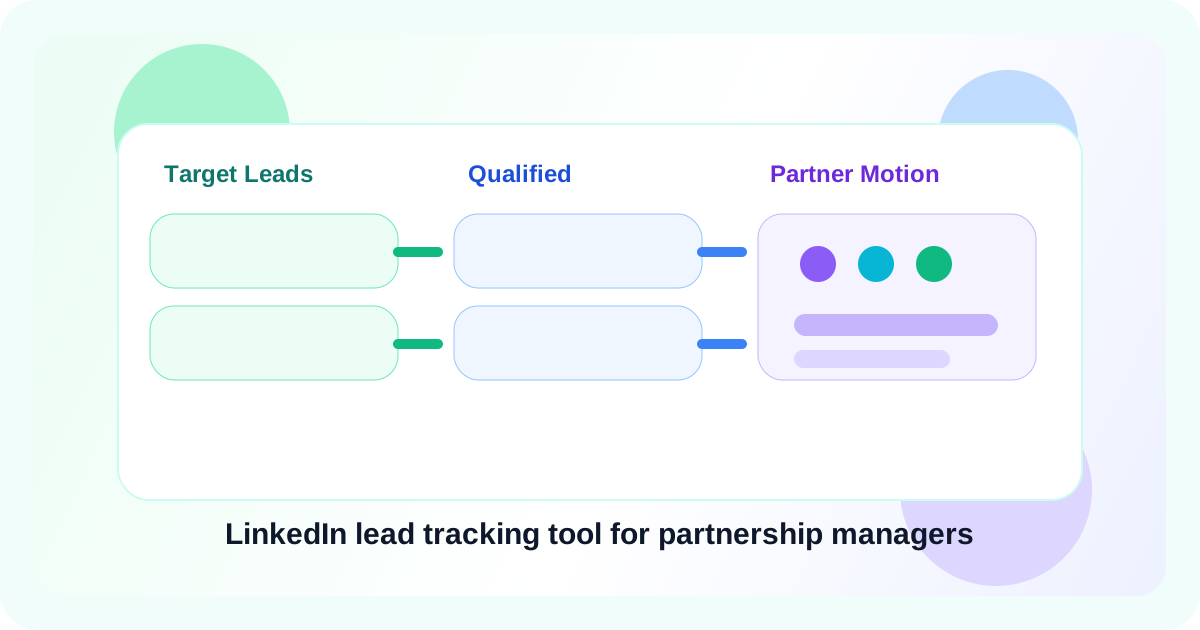
A LinkedIn lead tracking tool for partnership managers helps teams stage future-fit partners, promote qualified contacts into active outreach, and keep follow-up timing clear once ecosystem conversations begin. The best tools separate research from execution so the partner pipeline stays clean instead of mixing every interesting profile into one noisy list.
Partnership work often starts long before a live deal or joint motion appears. A manager may spot a promising agency, consultant, technology ally, or channel contact today and not need the first real message until weeks later. Without a clear lead-tracking layer, those future-fit contacts either disappear entirely or clutter the active outreach queue too early.
That is why the category question is different from generic outbound. A strong LinkedIn lead tracking tool for partnership managers should help the team capture a profile, note why the relationship matters, and hold it in a target stage until the right signal appears. DMnesia supports that workflow with one-click profile saving, Target Leads for pre-outreach staging, a Today queue for active follow-ups, and reply-aware tracking once the conversation starts moving.
What partnership managers need from a LinkedIn lead tracking tool
| Need | Why it matters for partnership teams | Useful outcome |
|---|---|---|
| Target staging | Future-fit contacts should not overwhelm the active follow-up queue | A separate target layer for ecosystem research and shortlist building |
| Signal-based promotion | Timing often depends on launches, referrals, events, or co-sell readiness | An easy move from target lead into active conversation tracking |
| Visible follow-up timing | Warm partner threads cool off when the next step is unclear | A queue showing which live contacts need action today |
| Reply awareness | Partner motions become awkward if the system ignores live response state | Cleanup that removes stale reminders after a reply |
Why partnership pipelines break before outreach even starts
Interesting profiles and active opportunities get mixed together
This is the most common failure mode. Teams save many potentially useful contacts but never mark which ones are still early research versus which ones deserve a real outreach plan. As the list grows, the queue becomes less trustworthy and the team stops using it.
There is no trigger for when a target becomes a real lead
Good partnership managers care about timing signals: a product launch, a new territory need, a co-marketing opportunity, or a referral path that opens. A lead-tracking system should preserve those target relationships until the signal is real, not force premature activity.
Warm partner context gets lost between cycles
Partnership work can pause for valid reasons. The problem is not the gap itself. The problem is returning later and forgetting why the profile was saved, what kind of ally they might be, or whether someone on the team already opened a conversation.
Partner rule: if your tracking system cannot show target leads, activated leads, and replied contacts as different states, it will eventually turn partner research into follow-up clutter.
How DMnesia supports partnership lead tracking
DMnesia works well for partnership managers because it protects the distinction between future-fit relationship building and active follow-up.
- Save ecosystem contacts in one click while researching on LinkedIn.
- Keep future-fit people in Target Leads until the timing is real.
- Promote qualified contacts into the Today queue when outreach should begin.
- Use templates carefully for repeatable intro asks or co-sell outreach.
- Clear stale reminders with reply-aware tracking once the conversation starts moving.
That makes DMnesia a better fit than forcing every partnership lead into a generic CRM or spreadsheet flow too early. The team keeps research organized, activates the right contacts at the right moment, and avoids turning the queue into a parking lot for every interesting profile on LinkedIn.
If your team also wants the workflow after outreach begins, read tracking LinkedIn conversations without a CRM for partnership managers. For earlier-stage sourcing strategy, the best companion read is how to build a LinkedIn prospect pipeline before reaching out for referral partnerships. If you are comparing broader growth tooling, pair this with sales engagement Chrome extension for partner-led growth.
Lead tracking options for partnership managers
| Approach | Where it helps | Where it falls short |
|---|---|---|
| Spreadsheet plus notes | Good for broad market maps and early lists | No clean transition into active follow-up |
| CRM-first pipeline | Useful once reporting and shared ownership get heavy | Over-structures early-stage relationship research |
| Browser-native lead tracking | Keeps context close to the profile and easier to activate later | Requires discipline around why each target was saved |
What to evaluate before choosing one
- Can it separate target leads from active outreach?
- Does it make promotion into follow-up simple when timing changes?
- Will the team still trust it after a month of ecosystem research?
- Can it reflect replies once a partner thread becomes live?
- Does it support a lightweight start without blocking future team visibility?
People also ask about LinkedIn lead tracking tools for partnership managers
Why do partnership managers need a LinkedIn lead tracking tool?
Partnership managers source future allies long before a live motion begins. A LinkedIn lead tracking tool keeps target accounts, warm introductions, and next-step timing visible so the team can promote the right contacts into active outreach at the right moment.
What should partnership teams track before outreach starts?
Track who the potential partner is, why the relationship matters, what signal makes the timing real, and whether the contact belongs in a target list or an active follow-up lane.
How does DMnesia support partnership lead tracking?
DMnesia helps partnership teams save profiles in one click, keep future-fit contacts in Target Leads, promote qualified people into a Today queue, and use reply-aware tracking once outreach begins.
Conclusion: lead tracking should protect partner timing, not bury it
The best LinkedIn lead tracking tool for partnership managers creates order before the relationship becomes urgent. It helps the team remember what belongs in the future, what belongs in motion, and what already moved forward. That separation is what keeps a partner pipeline usable over time.
Organize partner targets before the queue gets noisy
Use DMnesia to keep LinkedIn partner leads staged, qualified, and activated at the right moment.
Add DMnesia to ChromeFrequently asked questions
Why do partnership managers need a LinkedIn lead tracking tool?
Because partner research starts much earlier than active outreach, and teams need a way to hold good contacts without cluttering the live follow-up queue.
What should they track before outreach starts?
Track the profile, the relationship thesis, the trigger for outreach, and whether the contact is still just a target or already part of an active motion.
How does DMnesia help?
It gives partnership teams one-click capture, Target Leads, a Today queue, and reply-aware cleanup so the pipeline stays staged instead of messy.